Using long-lasting rovers on Venus is impossible. We want to use balloons.
Because of the extreme conditions on the surface of Venus, we will use atmospheric balloons instead of rovers. Specifically, the final objective is to use a constellation of long-duration balloons in the tropopause, where the temperature is around 55 °C and the pressure drops to 0.5 bar. Each of them would carry pressure and position sensors, allowing the triangulation of the sources of infrasonic waves propagating through the atmosphere. Such waves are generated in particular by quakes, which allows us to study the internal structure of the planet.
The DESTINY experiment aims to test this method in Earth’s stratosphere. Our goal is to characterize the infrasonic background of the atmosphere, to be able to recognize specific signals and locate their origins. We will use explosions on the ground as infrasound sources, but we will also look for other specific signals. To do so, we will measure the phase difference between the signals detected by distinct on-board barometers and process it to locate their origins.
Launch campaign
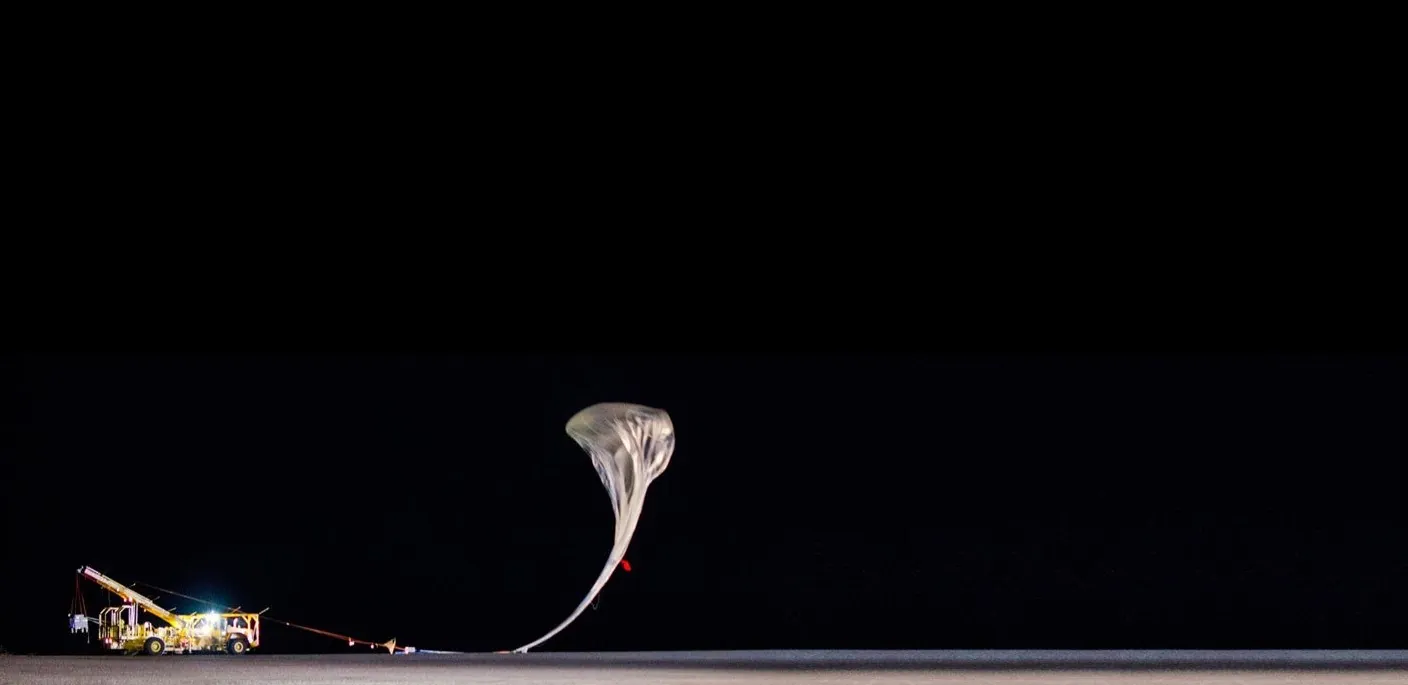
The project was realized through the REXUS/BEXUS program, which supports rocket and balloon experiments for university students, and allowed us to perform experiments in Earth’s stratosphere.
As Earth’s atmosphere is significantly less dense than the atmosphere of Venus, we had to create a stronger signal, which we achieved through the planned detonation of explosives.
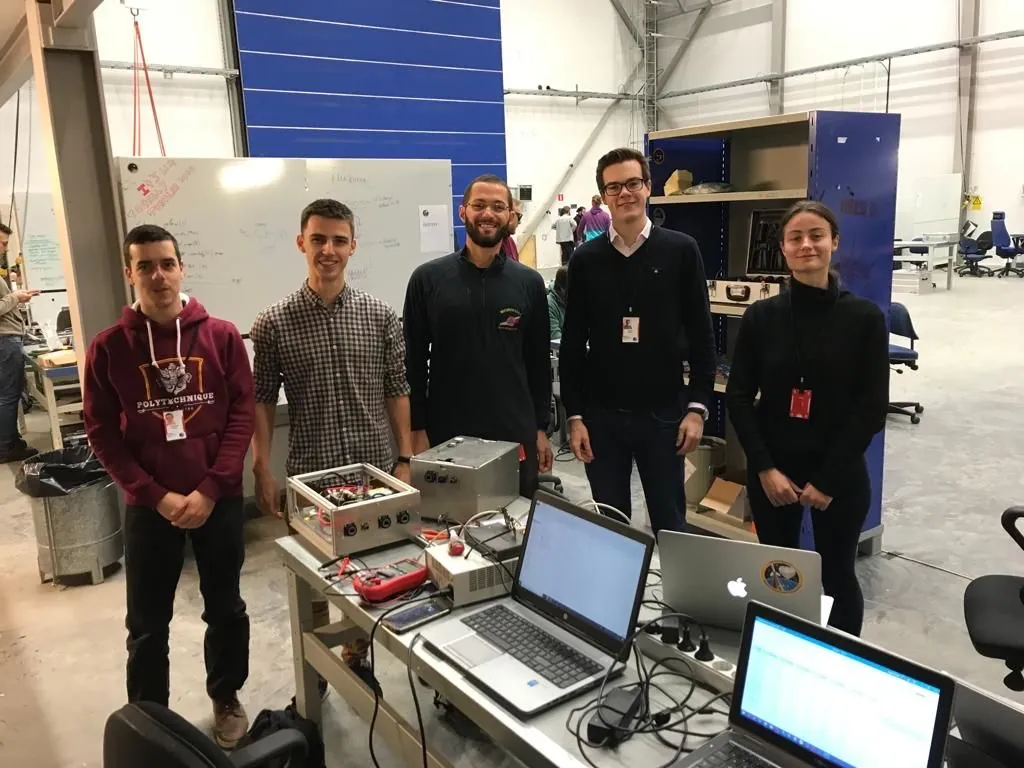
Two blasts were organized in Mertainen (400 kg and 800 kg TNT equivalent), to occur just after the beginning of the floating phase and one hour after, which we intended to detect and localize with our experimental setup. The launch took place during a ten-day window, including preparation and testing, at Esrange Space Center in Sweden.
Due to the weather, our launch was scheduled at 6 a.m. local time, before the time at which the LKAB company could perform the blasts. The winds also carried the balloon away from the Mertainen mine, where the blasts took place, faster than we expected. As a consequence, we could only perform one of the two planned blasts during the floating phase, and it took place with the balloon 240 km away from the Esrange launch pad, instead of the less than 150 km we had initially planned.